
Fixed vs. Growth Mindset
Understand the meaning of fixed vs. growth mindset, and unleash Your Potential for Success and Fulfilment

Fixed vs. Growth Mindset
In the fascinating landscape of personal development, the concept of mindset emerges as a defining factor that shapes our attitudes, behaviours, and ultimate success. Two contrasting mindsets, fixed and growth, have garnered significant attention for their profound impact on how we approach challenges, learn from experiences, and achieve our goals. In this article, we embark on a journey to explore the key distinctions between fixed and growth mindsets, understanding how the latter can be a catalyst for greater achievement and fulfilment in all aspects of life.
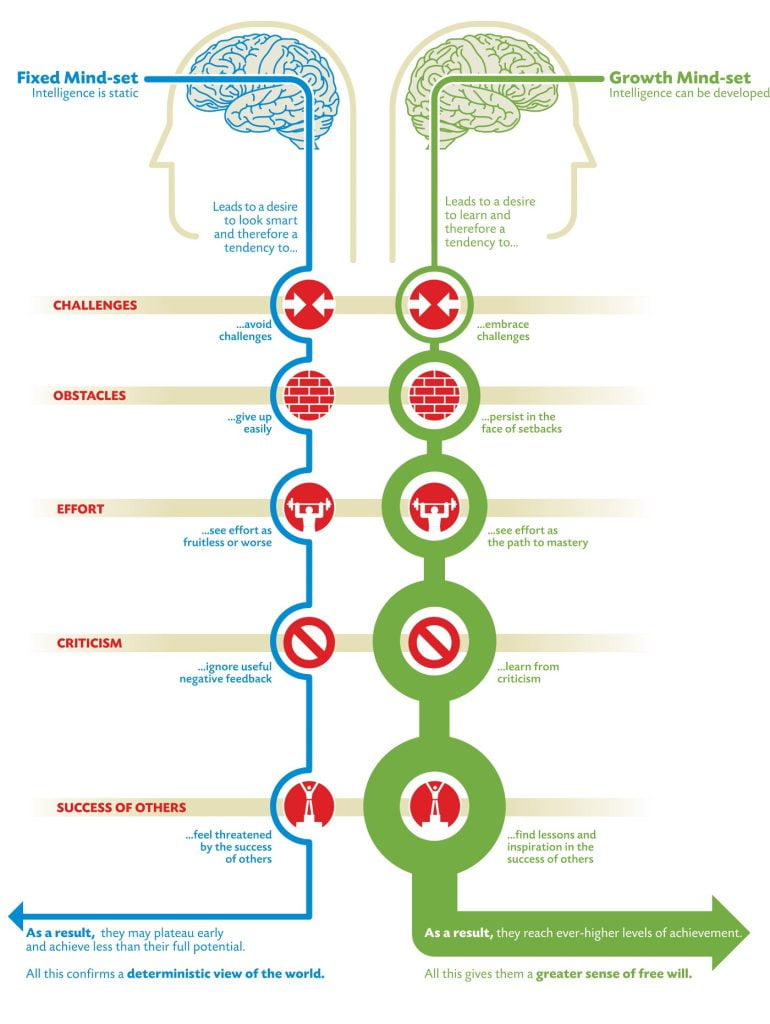
Fixed Mindset
The Shackles of Limitation
At the heart of a fixed mindset lies the belief that our abilities, talents, and intelligence are unchangeable traits determined by genetics or innate factors. Individuals with a fixed mindset tend to avoid challenges that could expose their perceived weaknesses, fearing failure and the judgment of others. Their focus often revolves around maintaining their image of competence rather than embracing opportunities for growth.
Characteristics of a Fixed Mindset
- Avoidance of Challenges: Fixed mindset individuals tend to shy away from situations where they might not excel immediately.
- Fear of Failure: The prospect of failure is daunting, as it threatens their self-image of being naturally skilled.
- Fear of Failure: If you believe you will fail you tell yourself you won’t be disappointed when it does.
- Defensiveness: Feedback or criticism is often taken personally, as it challenges their self-perception.
- Limited Resilience: Setbacks can lead to discouragement and the belief that they lack the necessary abilities.
- Stagnation: With a fixed mindset, personal growth is stunted due to the avoidance of challenges.
Growth Mindset
Cultivating Potential and Resilience
Conversely, a growth mindset thrives on the belief that abilities and intelligence can be developed through dedication, hard work, and learning from experiences. Those with a growth mindset embrace challenges as opportunities for growth, persist in the face of setbacks, and actively seek out ways to expand their skillset. This mindset fosters a passion for learning, resilience, and a sense of agency over one’s destiny.
Characteristics of a Growth Mindset
- Embracing Challenges: Individuals with a growth mindset view challenges as chances to learn and improve.
- Learning from Failure: Setbacks are seen as stepping stones toward improvement, and feedback is welcomed.
- Openness to Feedback: Constructive criticism is seen as valuable input for self-improvement.
- Persistence: Effort is considered a path to mastery, even in the face of initial struggles.
- Continuous Growth: The growth mindset leads to a constant pursuit of self-development.
The Impact on Achievement and Fulfilment
The mindset we adopt significantly influences our achievements and overall fulfilment. Studies have shown that individuals with a growth mindset tend to outperform their fixed mindset counterparts over time. By embracing challenges and viewing failure as a learning opportunity, growth mindset individuals cultivate resilience, persistence, and a thirst for improvement. This often leads to greater achievements, as they are not bound by the fear of failure.
Real-Life Examples
Fixed Mindset Example: An individual avoiding public speaking due to a fear of embarrassment. They believe they either have the “gift” of being a good speaker or they don’t, and they don’t see the point in trying if they’re not naturally talented.
Growth Mindset Example: A student putting in extra hours to study for a challenging exam. They believe that with dedication and effort, they can improve their understanding of the subject matter and perform well, regardless of their initial proficiency.
The Science Behind It – Research and Evidence
Research Paper 1: “The Role of Mindset in Academic Success” by Carol Dweck (2006) Dweck’s influential study emphasized that a growth mindset is linked to greater academic achievement. Students who believed in their ability to develop skills through effort performed better over time compared to those with a fixed mindset.
Research Paper 2: “Implicit Theories of Intelligence Predict Achievement Across an Adolescent Transition: A Longitudinal Study and an Intervention” by Lisa S. Blackwell, Kali H. Trzesniewski, and Carol S. Dweck (2007) This study found that a growth mindset intervention positively impacted academic achievement, particularly among students who initially had a fixed mindset.
Conclusion – Unlocking Your Potential
In the ongoing journey of personal development, the choice between a fixed and growth mindset is transformative. By embracing a growth mindset, you free yourself from the limitations of self-doubt and fear of failure. You open doors to new opportunities, resilience, and a lifelong love of learning. The power to achieve your goals and find fulfilment lies within your perspective—choose the mindset that propels you toward greatness.
Foster Your Growth Mindset
Ready to take the first step toward a growth mindset? Explore our resources on cultivating a mindset for success. Embrace challenges, welcome feedback, and approach each experience as an opportunity to learn and improve. By adopting a growth mindset, you set the stage for a life filled with achievement and personal fulfilment.
Resources:
- “Mindset: The New Psychology of Success” by Carol Dweck (2006)
- “Implicit Theories of Intelligence Predict Achievement Across an Adolescent Transition: A Longitudinal Study and an Intervention” by Lisa S. Blackwell, Kali H. Trzesniewski, and Carol S. Dweck (2007)
- “Brainology: Transforming Students’ Motivation to Learn” by Lisa S. Blackwell, Kali H. Trzesniewski, and Carol S. Dweck (2007)
- “The Influence of Implicit Theories on Anxiety about Mathematics and Physics: Results from a Prospective Study” by Klara Zimmermann and Ute S. Müller (2009)
- “Implicit Theories of Intelligence Predict Achievement Across an Adolescent Transition: A Longitudinal Study and an Intervention” by Susana Claro, David Paunesku, Carol S. Dweck (2016)